Big Lap Budget Breakdown: How Much Does a Lap of Australia REALLY Cost?
Wondering about the real cost of a Big Lap? We break down expenses for fuel, food, accommodation & more. Plan your budget today!
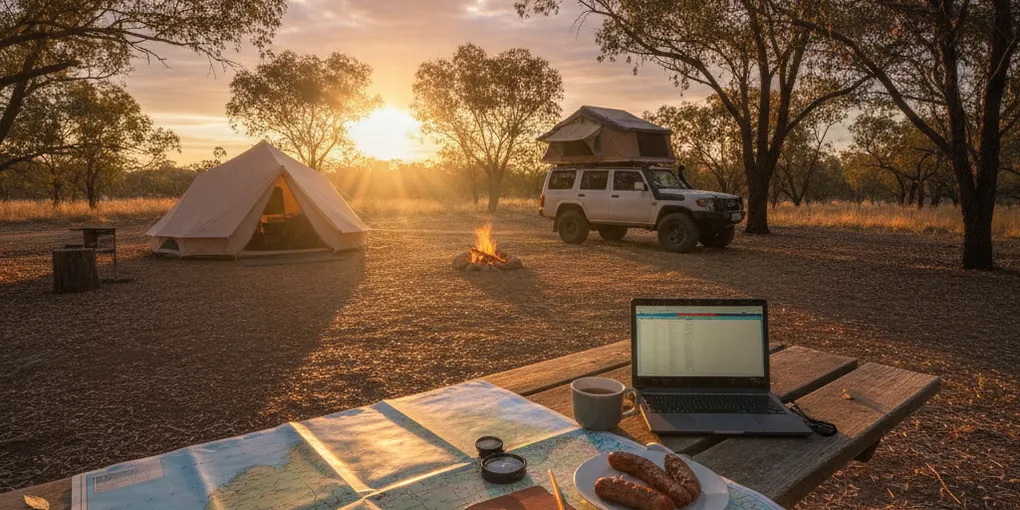
So, how much does a Big Lap of Australia really cost? Expect to budget anywhere from $50,000 to $100,000+ for a year-long trip, depending on your travel style and choices.
The dream of travelling around Australia, a ‘Big Lap’, is something many Aussies fantasise about. But the big question that always looms is: how much money do I actually need? It’s not a simple one-size-fits-all answer, as your personal travel style, vehicle, and pace will heavily influence your final expenditure. However, by breaking down the common expenses and offering realistic estimates, you can start to build a picture for your own epic adventure.
This isn’t just about dreaming; it’s about planning. And for anyone serious about making their Big Lap a reality, understanding the financial commitments is paramount. That’s why we’re diving deep into a realistic budget breakdown, so you can feel confident in your preparations.
Realistic Big Lap Budget Breakdown: Key Expense Categories
When you’re planning your lap, it’s easy to get overwhelmed. Breaking it down into manageable categories makes it far less daunting. Here are the major areas you’ll need to consider.
Fuel: The Ever-Present Cost
For most travellers doing a Big Lap, fuel is often the largest single expense. The sheer distance you’ll cover means your trusty vehicle will be thirsty.
Factors influencing fuel costs:
- Your Vehicle’s Fuel Consumption: A V8 4WD will guzzle more than a small campervan.
- Distance Covered: The more kilometres you clock up, the more you’ll spend.
- Fuel Prices: These fluctuate wildly across the country, especially in remote areas.
Estimating Fuel Costs:
A common rule of thumb is to estimate an average daily distance. If you plan on travelling around 150-200 km per day on average (which includes rest days), and your vehicle averages 12L/100km, with fuel at $2.00/L, you’re looking at roughly $36-$48 per day just on fuel. Over a year (365 days), this can easily add up to $13,000 - $17,500. Some people might do more, some less. It’s crucial to understand your own vehicle’s consumption.
Accommodation: Where Will You Sleep?
This is another area where your choices can significantly impact your budget. From free camps to luxury resorts, the options are vast.
Budget-Friendly Options:
- Free Camping: Utilising designated free campsites can save you a fortune. However, research is key, and facilities are often minimal.
- National Parks & State Forests: Often offer very affordable camping with basic facilities.
- Low-Cost Caravan Parks: Many regional parks offer powered sites for $30-$50 per night.
Mid-Range & Higher-End Options:
- Caravan Parks (Mid-Tier): Expect to pay $40-$70 per night for powered sites with more amenities.
- Hotels & Motels: If you need a break from camping, these will be significantly more expensive, averaging $150-$250+ per night.
Estimating Accommodation Costs:
Let’s assume a mix. If you aim for 70% free/low-cost camping (average $25/night) and 30% mid-tier caravan parks ($50/night), over 365 days:
(365 days * 0.70 * $25) + (365 days * 0.30 * $50) = $6,387.50 + $5,475 = $11,862.50
This is a rough guide. Some laps are almost entirely free camping, while others lean more towards powered sites and occasional motels.
Food & Groceries: Fueling Your Adventures
Eating out every meal will quickly drain your funds. Most Big Lappers rely heavily on self-catering.
Key Considerations:
- Grocery Prices: Remote towns can have significantly higher grocery prices. Stocking up in larger centres is often more economical.
- Eating Out: A treat here and there is part of the experience, but make it a treat, not a habit.
- Alcohol: If you enjoy a drink, factor this into your budget.
Estimating Food Costs:
For a couple cooking most meals and enjoying a few casual meals out per week, a budget of $800 - $1200 per month is a reasonable starting point. This equates to $9,600 - $14,400 per year.
Activities & Sightseeing: Experiencing Australia
This is where your Big Lap truly comes alive! From world heritage sites to unique local attractions, there’s so much to see and do.
Examples of Costs:
- National Park Entry Fees: Vary by park and duration of stay.
- Tours & Experiences: Whale watching, reef trips, Indigenous cultural tours, etc.
- Museums & Attractions: Local historical sites, art galleries.
Estimating Activity Costs:
This is highly personal. Some travellers focus on free hikes and natural wonders, while others enjoy organised tours and paid attractions. A conservative estimate for a year might be $3,000 - $7,000 per person, but this can easily be much higher if you’re a keen adventurer.
Vehicle Maintenance & Repairs: The Unforeseen
No matter how well-prepared you are, things can go wrong. It’s wise to set aside a contingency fund for unexpected repairs.
What to budget for:
- Regular Servicing: Oil changes, tyre rotations, etc.
- Tyre Replacements: Especially if you’re doing a lot of off-road driving.
- Unexpected Breakdowns: A tow truck, minor repairs.
Estimating Maintenance Costs:
A good rule of thumb is to budget $1000 - $2000 per year for routine maintenance, and have a separate contingency fund of $2,000 - $5,000 for unexpected issues.
Miscellaneous & Contingency: The “Just In Case” Fund
This covers everything else: laundromat visits, park fees, Wi-Fi, haircuts, souvenirs, and crucially, an emergency fund.
Don’t forget to include:
- Laundromats: Essential for longer stretches between washing facilities.
- Communication: Mobile phone plans, satellite phones (if needed).
- Insurance: Vehicle, travel insurance.
- Emergency Fund: For medical emergencies, unexpected detours, or if you simply need to return home early.
Estimating Miscellaneous Costs:
A buffer of $100 - $200 per week ($5,200 - $10,400 per year) for miscellaneous expenses and a dedicated contingency fund of at least $5,000 - $10,000 is highly recommended.
Sample Big Lap Budget (Per Couple for 1 Year)
Here’s a look at a potential budget, assuming a moderate travel style for a couple over 12 months. This is a guide, not a hard rule!
| Category | Low End Estimate (per year) | High End Estimate (per year) |
|---|---|---|
| Fuel | $13,000 | $17,500 |
| Accommodation | $9,000 | $15,000 |
| Food & Groceries | $9,600 | $14,400 |
| Activities & Sightseeing | $3,000 | $7,000 |
| Vehicle Maintenance | $1,500 | $3,000 |
| Miscellaneous | $5,200 | $10,400 |
| Contingency/Emergency | $5,000 | $10,000 |
| TOTAL (Approx.) | $46,300 | $77,300 |
Important Notes:
- This does NOT include the initial purchase of a vehicle or caravan. This budget is for travelling expenses once you’re on the road.
- Pace of Travel: A faster pace with more driving and overnight stays will increase fuel and accommodation costs. A slower pace with longer stays in cheaper locations will reduce them.
- Luxury vs. Budget: This leans towards a mid-range budget. A true budget lap could be done for less, and a luxury lap could easily exceed $100,000.
The Secret Weapon: Tracking Your Expenses
The most effective way to manage your Big Lap budget and ensure you’re staying on track is to track every dollar spent. This is where tools like The Lap Club Budget Tracker come in handy. Having a clear overview of where your money is going allows you to make informed decisions on the fly – do you splurge on that scenic helicopter ride, or opt for a few extra days of free camping?
You can find the Budget Tracker and many other resources to help you plan your journey at https://lapclub.com.au/budget. It’s about empowering yourself with knowledge and making your dream lap financially viable.
Planning is Key to a Successful Big Lap
A Big Lap is a significant undertaking, both in terms of time and money. However, with realistic budgeting, diligent tracking, and a willingness to adapt, it’s an achievable dream for so many Australians. Don’t let financial uncertainty hold you back; embrace the planning process, and you’ll be well on your way to exploring the incredible diversity of our magnificent country.
Ready to take the next step in planning your ultimate Australian adventure? Join the waitlist for The Lap Club app and connect with a community of like-minded travellers. Visit https://lapclub.com.au to learn more.
For more insights into Big Lap life, check out our other articles on the blog: https://lapclub.com.au/blog.
Frequently Asked Questions (FAQ)
How much money do you need for a 6-month Big Lap?
For a 6-month Big Lap for a couple, you could budget roughly $25,000 - $45,000, depending on your spending habits. This is a scaled-down version of the annual estimate, focusing on a shorter duration.
What is the cheapest way to do a Big Lap?
The cheapest way involves maximising free camping, cooking all your own meals, minimising paid activities, and travelling in a fuel-efficient vehicle. Researching free campsites and utilising local knowledge are crucial for a budget Big Lap.
Is it cheaper to travel Australia in a caravan or a campervan?
Generally, a smaller campervan or motorhome might be cheaper to run due to better fuel economy than a larger caravan pulled by a 4WD. However, the initial purchase cost and depreciation also need to be considered.
What is the best app for travelling Australia?
The Lap Club app is designed to be the ultimate companion for travellers doing a Big Lap of Australia, offering community connection, route planning, and budgeting tools. You can join the waitlist at https://lapclub.com.au.