Big Lap Fuel Hacks: Slash Your Spend & Drive Further!
Master the Big Lap with our top fuel-saving tips. Discover how to find cheap fuel and make your budget stretch further on the road.
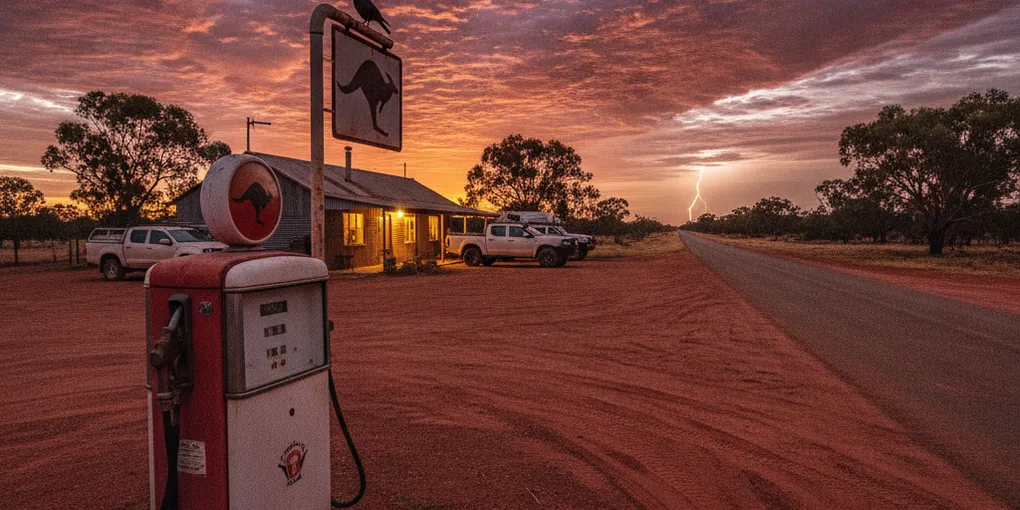
Planning your Big Lap is an adventure of a lifetime, but the thought of fuel costs can sometimes put a dampener on the excitement. How can you possibly save money on fuel when you’re travelling thousands of kilometres across Australia? By being smart about your refuelling stops and adopting a few simple driving habits, you can significantly reduce your fuel expenditure and keep exploring for longer.
This guide is packed with practical, actionable tips to help you conquer the costs of fuel on your epic Australian journey.
How to Save Money on Fuel for Your Big Lap
Saving money on fuel for your Big Lap is achievable with a combination of smart planning, strategic refuelling, and mindful driving. Utilising real-time fuel price data and adopting efficient driving techniques are key to making your fuel budget go further.
1. Become a Fuel Price Detective: The Power of Apps
Gone are the days of just pulling into the first servo you see. In today’s connected world, knowledge is power, especially when it comes to fuel prices. The variation in fuel costs across Australia can be astounding, and a few cents per litre difference can add up to hundreds, if not thousands, of dollars over your Big Lap.
This is where live fuel price apps become your best mate. The Lap Club lists a large servo catalogue, and it shows live prices where a state feed exists: NSW, QLD, WA and SA. Before you pull out of a town in those states, check the prices along the next stretch. You might save a few cents a litre by driving an extra 10 or 20 kilometres. Do not count on a live price in every town.
Why is this so important?
- Regional Variations: Fuel prices can fluctuate dramatically between major cities, regional centres, and remote outposts. Rural and remote areas often have higher prices due to transportation costs.
- Time of Day/Week: While not as drastic as location, sometimes prices can shift slightly throughout the day or week.
- Competitive Pricing: Knowing where the competition is can encourage cheaper pricing at individual stations.
Consider this scenario: You’re driving between two towns, and one has fuel at $2.10/litre and the next town along your route has it at $1.95/litre. If you have a 100-litre tank, that’s a saving of $15 per fill-up. If you fill up 50 times on your trip, that’s $750 saved! It might mean planning your day around a slightly longer drive, but that saving is often well worth it.
Check prices every day or two and plan the refill around that. The Lap Club shows live fuel prices in NSW, QLD, WA and SA (coverage is thin in VIC and the ACT, and there are no live prices for NT or TAS yet). It is free during beta at https://lapclub.com.au.
2. Drive Like a Pro: Fuel-Efficient Driving Techniques
Your driving style has a HUGE impact on your fuel consumption. Smooth, consistent driving is the name of the game. Aggressive acceleration and harsh braking are like pouring money straight out of your fuel tank.
Here are some key techniques to adopt:
- Gentle Acceleration: Imagine you have an egg under your accelerator pedal. Gradually increase your speed rather than flooring it. This allows the engine to reach its optimal operating range more efficiently.
- Anticipate Traffic: Look well ahead. If you see a red light or a queue of traffic forming, take your foot off the accelerator and let the car coast to a stop rather than braking at the last moment. This conserves momentum.
- Maintain a Steady Speed: Cruise control is your friend on long, flat stretches of highway. It helps maintain a consistent speed, which is far more fuel-efficient than constantly adjusting your foot on the pedal.
- Avoid Excessive Idling: If you’re going to be stopped for more than a minute (e.g., waiting for someone, a long train crossing), it’s often more fuel-efficient to turn off your engine.
3. Lighten the Load: Less Weight, Less Fuel
It sounds simple, but it’s true: the heavier your vehicle, the more fuel it will consume. Every kilogram you carry requires more energy to move.
- Declutter Your Rig: Go through your caravan, camper, or vehicle and question every item. Do you really need three different types of spatulas? Is that extra set of novelty thongs essential? Pack smart and only bring what you genuinely use.
- Water Storage: While water is essential, consider how much you’re carrying at any given time. Can you top up in smaller, more frequent stops rather than carrying 200 litres from the outset?
- Roof Racks and External Storage: If you’re not using them, remove them. These create drag, which also impacts fuel efficiency, especially at higher speeds.
4. Tyres are Key: Proper Inflation for Optimal Performance
Under-inflated tyres are a silent fuel guzzler. They increase rolling resistance, meaning your engine has to work harder to keep the vehicle moving.
- Check Regularly: Make it a habit to check your tyre pressure at least once a week, and more frequently if you’re travelling on varied terrain or experiencing significant temperature changes.
- Use the Correct Pressure: Refer to your vehicle’s manual or the sticker on the doorjamb for the recommended tyre pressures. Remember that tyre pressure can change with temperature, so check when the tyres are cold.
- Consider Towing: If you’re towing, ensure your caravan or trailer tyres are also correctly inflated. Your tow vehicle will thank you for it.
5. Plan Your Route Strategically: Avoid Unnecessary Kilometres
While spontaneity is a part of the Big Lap’s charm, a little pre-planning can go a long way in saving fuel.
- Combine Errands: If you need to stock up on supplies, visit the post office, and refuel, try to do it all in one town to avoid doubling back or making extra trips.
- Consider the Terrain: Hilly or mountainous routes will naturally consume more fuel than flatter ones. While you can’t always avoid them, be aware of the impact on your fuel gauge.
- Utilise Route Planners: Many GPS devices and mapping apps allow you to plan routes. Look for options that might suggest more direct or fuel-efficient paths, though always cross-reference with your knowledge of road conditions and potential detours.
Fuel Price Comparison: What You Could Save
To illustrate the impact of fuel price differences, consider this comparison table. These are hypothetical, but representative of real-world variations you might encounter.
| Location Type | Average Price Per Litre (Example) | Total Cost for 100 Litres (Example) |
|---|---|---|
| Major City | $1.90 | $190 |
| Regional Town | $2.05 | $205 |
| Remote Outback Town | $2.30 | $230 |
| Coastal Tourist Hotspot | $2.15 | $215 |
As you can see, choosing to refuel in a regional town instead of a remote outback location can save you $40 on a 100-litre fill-up. Over the course of your Big Lap, these savings multiply significantly. This is where knowing your prices ahead of time, using tools like The Lap Club, can genuinely make your budget stretch further, allowing for more experiences and fewer worries about the pump.
More Ways to Make Your Big Lap Budget Last
Beyond fuel, keeping a close eye on your overall spending is crucial for a successful Big Lap. This blog on https://lapclub.com.au/blog has a wealth of articles on budget management and frugal travel. From saving on food and accommodation to finding free activities, there are countless ways to make your money work harder for you.
The Big Lap is an incredible experience, and with a bit of planning and smart decision-making, you can ensure your fuel costs don’t derail your adventure. Happy travels!
Frequently Asked Questions (FAQ)
What is the best app for travelling Australia to find cheap fuel?
The Lap Club (free during beta at https://lapclub.com.au) shows live fuel prices in NSW, QLD, WA and SA. VIC has about 10 stations, the ACT about 8, and NT and TAS have no live prices yet. Use it to compare the servos that are actually reporting, then keep a buffer for the stretches with no feed.
How much fuel can I save by driving slower?
Driving slower, particularly by reducing your speed from 110 km/h to 100 km/h on highways, can lead to a fuel saving of approximately 10-15%. The exact saving depends on your vehicle and road conditions, but a gentler, more consistent speed is always more fuel-efficient.
Should I fill up my caravan or motorhome at the cheapest price I see, even if it’s not on my direct route?
It’s generally worth diverting for a significant saving, especially if you can fill up at a cheaper price and then continue on your planned route. However, weigh the fuel saved against the extra kilometres driven. If the saving is marginal and the detour is substantial, it might not be worth the extra time and wear and tear. Using a live fuel price app like The Lap Club helps you make these informed decisions.
Are there any other significant fuel-saving tips for a Big Lap that I might be missing?
Beyond the core tips of using fuel price apps, driving efficiently, managing weight, and maintaining tyre pressure, consider planning your route to minimise high-speed driving on challenging terrain. Also, ensuring your vehicle and caravan (if applicable) are regularly serviced can improve engine efficiency. Combine these with smart refuelling strategies to maximise your range and minimise your spend.