Powering Your Big Lap: The Ultimate Solar & Battery Guide for Off-Grid Caravans
Unlock off-grid freedom! Our guide to solar panels and batteries for your caravan Big Lap, plus The Lap Club Power Calculator.
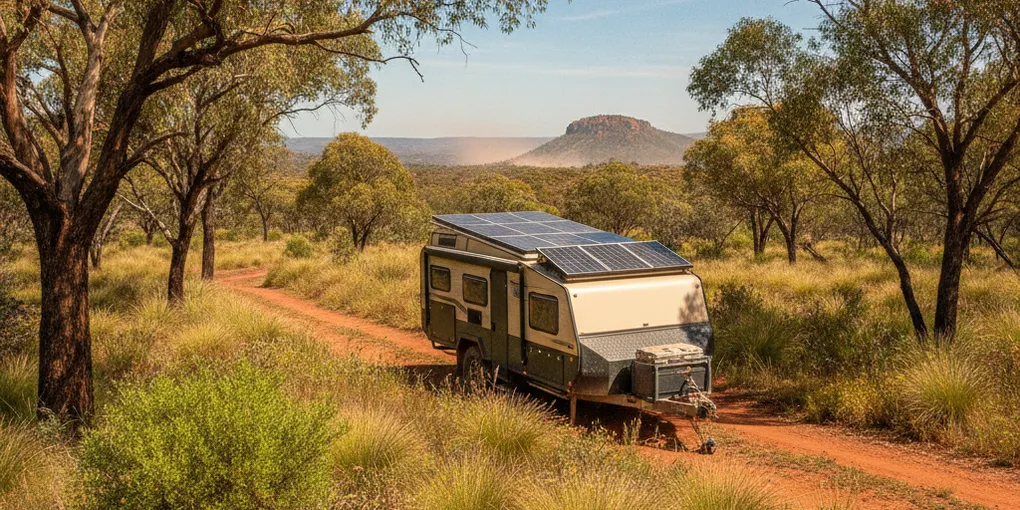
Planning your epic Big Lap means thinking about how to stay powered up, especially when you’re kilometres from the nearest caravan park. Understanding solar and battery systems is key to true off-grid freedom and a seamless travelling experience.
Solar Panels for Caravans: Harnessing the Sun
For many of us hitting the road for an extended period, the thought of endless caravan park fees can be a drag. Going off-grid, however, opens up a world of incredible, remote campsites. The sun is your most abundant, free power source, and solar panels are the gateway to using it.
How Solar Panels Work
Solar panels, also known as photovoltaic (PV) panels, are made up of many individual solar cells. When sunlight hits these cells, it excites electrons, creating a direct current (DC) of electricity. This DC power then flows through a charge controller to your batteries, where it’s stored for later use.
Types of Solar Panels for Caravans
You’ll primarily encounter two main types of solar panels for caravan setups:
- Monocrystalline Panels: These are the most efficient type, recognisable by their uniform black colour and rounded corners. They perform slightly better in low light conditions and have a longer lifespan. They are also generally more expensive.
- Polycrystalline Panels: These are less efficient than monocrystalline panels but are more budget-friendly. They have a distinctive blue, speckled appearance.
For most travellers, monocrystalline panels offer the best balance of performance and longevity, even if the initial outlay is higher.
Sizing Your Solar Array: How Many Panels Do You Need?
This is where things get a bit technical, but it’s crucial for a reliable power system. The number of panels you need depends on:
- Your daily power consumption: What appliances do you use, and how often?
- The wattage of your panels: Higher wattage panels produce more power.
- Your location and expected sunlight: Australia gets plenty of sun, but angles and cloud cover matter.
To help you get a handle on your daily draw and estimate solar yield, we’ve developed The Lap Club Power Calculator over at https://lapclub.com.au/power. It’s an invaluable tool to get you started and understand your energy needs before you even buy a panel.
Mounting Your Solar Panels
You have a few options for mounting your panels on your caravan:
- Fixed Roof Mounts: The most common and cost-effective. Panels are permanently attached to your caravan roof.
- Tilting Roof Mounts: Allow you to tilt the panels to track the sun throughout the day, significantly increasing your power generation.
- Portable/Folding Panels: Excellent for setting up on the ground away from the caravan, especially if trees or your caravan’s position create shade. They offer flexibility but require manual setup and packing away.
Batteries: Storing Your Sunshine
Solar panels only work when the sun is shining. Batteries are essential for storing that generated power so you can use it when you need it most – at night, on cloudy days, or when your appliances are drawing significant power.
Types of Caravan Batteries
The battery technology you choose will have a big impact on performance, lifespan, and cost.
- Lead-Acid Batteries (AGM & Gel): These are the traditional and most affordable option. They are heavy and have a limited lifespan. AGM (Absorbent Glass Mat) and Gel are sealed, maintenance-free versions of lead-acid batteries. They are susceptible to damage from deep discharges.
- Lithium Batteries (LiFePO4): These are the modern go-to for serious off-grid travellers. They are significantly lighter, have a much longer lifespan (often 10+ years), can be discharged deeper without damage, and charge faster. While the upfront cost is higher, their longevity and performance often make them more economical in the long run.
Here’s a quick comparison:
| Feature | Lead-Acid (AGM/Gel) | Lithium (LiFePO4) |
|---|---|---|
| Weight | Heavy | Lightweight |
| Lifespan | 3-5 years (typical) | 10+ years (typical) |
| Depth of Discharge | 50% recommended | 80-100% possible |
| Charging Speed | Slower | Faster |
| Cost | Lower upfront | Higher upfront |
| Maintenance | Low (sealed) | Virtually none |
| Efficiency | Lower | Higher |
For anyone serious about extended off-grid travel, investing in LiFePO4 lithium batteries is highly recommended.
Sizing Your Battery Bank: How Much Storage Do You Need?
This is directly linked to your daily power consumption. You need enough battery capacity to cover your needs for a minimum of 1-2 days without significant solar input, allowing for cloudy weather. Again, The Lap Club Power Calculator is your best friend here, helping you estimate this crucial figure. Don’t underestimate your power needs – it’s a common mistake!
The Crucial Link: Solar Charge Controller
You can’t just connect solar panels directly to your batteries. A solar charge controller acts as the brain of your solar system. It regulates the voltage and current coming from your solar panels, preventing overcharging and protecting your batteries.
There are two main types:
- PWM (Pulse Width Modulation) Controllers: Simpler and more affordable. They are best suited for smaller systems.
- MPPT (Maximum Power Point Tracking) Controllers: More advanced and significantly more efficient, especially in fluctuating light conditions or when panel voltage is much higher than battery voltage. MPPT controllers can harvest up to 30% more power from your panels compared to PWM. For most modern caravan setups, an MPPT controller is the way to go.
Inverters: AC Power for Your Appliances
Your solar panels and batteries produce DC power, but most of your household appliances (TVs, laptops, microwaves, hair dryers) run on AC (Alternating Current) power. An inverter converts DC power from your batteries into AC power.
- Pure Sine Wave Inverters: These produce a clean, stable power output that’s identical to mains power. They are essential for sensitive electronics like laptops, TVs, and modern appliances.
- Modified Sine Wave Inverters: Cheaper, but they produce a less stable waveform. They are only suitable for simple devices like basic heaters or lights, and can damage or shorten the life of more complex electronics. Always opt for a pure sine wave inverter for your caravan.
Sizing Your Inverter
Your inverter needs to be powerful enough to handle the combined wattage of all the AC appliances you might run simultaneously. Check the wattage requirements of your appliances and add them up. It’s also a good idea to have a little headroom.
Bringing It All Together: System Design & Installation
Designing an off-grid solar and battery system can seem daunting, but it’s achievable with research and the right tools.
- Calculate Your Daily Energy Draw: Use The Lap Club Power Calculator (https://lapclub.com.au/power) to understand your power consumption.
- Determine Solar Array Size: Based on your draw and expected sunlight, estimate how many watts of solar panels you need.
- Size Your Battery Bank: Ensure you have enough amp-hours (Ah) of storage to cover your needs, factoring in depth of discharge limits.
- Select a Charge Controller: Choose an MPPT controller for maximum efficiency.
- Choose an Inverter: Opt for a pure sine wave inverter rated for your peak AC load.
- Wiring & Safety: Ensure all connections are secure and correctly rated. If you’re not confident, consult a qualified auto electrician. Safety first!
Tips for Maximising Solar Power
- Keep panels clean: Dust, dirt, and bird droppings can significantly reduce output.
- Angle panels correctly: Tilt them towards the sun where possible.
- Avoid shade: Position your caravan to minimise shading on the panels.
- Monitor your system: Regularly check battery levels and solar production.
The Big Lap is about freedom and adventure, and having a reliable power system is fundamental to that. Taking the time to understand your solar and battery needs, and utilising resources like The Lap Club’s Power Calculator, will set you up for a truly unforgettable off-grid experience. You can find more helpful articles and connect with fellow travellers on our blog at https://lapclub.com.au/blog.
Frequently Asked Questions (FAQ)
How much solar power do I need for a caravan?
The amount of solar power needed varies greatly depending on your daily energy consumption. Generally, aim for a solar array size that can replenish your battery bank’s daily usage within daylight hours, considering average Australian sunlight. Use The Lap Club Power Calculator to get a personalised estimate.
What is the best type of battery for off-grid caravanning in Australia?
LiFePO4 (Lithium Iron Phosphate) batteries are widely considered the best choice for off-grid caravanning due to their light weight, long lifespan, deep discharge capability, and faster charging. While more expensive upfront, they offer better value and performance for extended travel.
How do I calculate my caravan’s daily power draw?
You calculate your daily power draw by listing all the 12V and 240V appliances you intend to use, their wattage, and the estimated number of hours you’ll use them per day. Multiply wattage by hours for each appliance to get watt-hours (Wh) per day, then sum them up. The Lap Club Power Calculator simplifies this entire process.
What is the best app for travelling Australia off-grid?
The Lap Club power calculator is for Big Lap travellers working out solar and battery draw. It is free during beta at https://lapclub.com.au.