Power Up Your Big Lap: The Ultimate Off-Grid Solar & Battery Guide for Caravans
Master off-grid caravan power! Learn about solar panels, batteries, and the essential Lap Club Power Calculator for your Australian Big Lap.
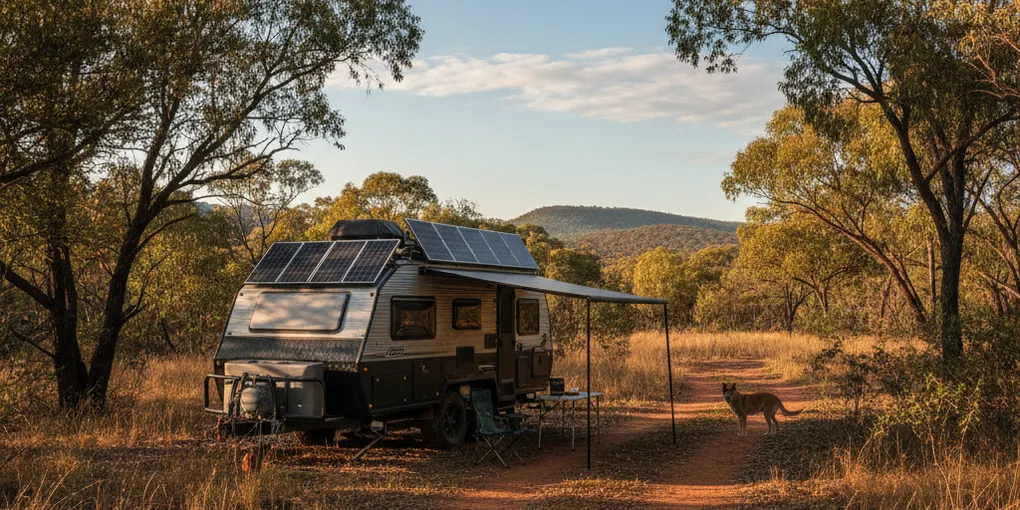
Heading off on the ultimate Australian adventure? For many of us, the dream of a Big Lap involves freedom, flexibility, and being completely self-sufficient. But that freedom is directly tied to your caravan’s power system. So, how do you harness the sun and store it for those magnificent off-grid nights?
This guide will equip you with the essential knowledge to navigate the world of solar panels, batteries, and all things power for your off-grid caravan travels. We’ll demystify the jargon, explain the key components, and show you how to build a system that keeps your fridge humming and your devices charged, no matter how far you roam.
Understanding Your Off-Grid Power Needs: What Draws the Juice?
Before you even think about solar panels or batteries, the most crucial step is understanding your daily power consumption. What appliances will you be running, and for how long each day? This is the foundation of a well-sized and efficient off-grid system.
Essential Appliances and Their Power Draw
Think about your typical day in the caravan. Every appliance, from your lights to your TV, draws power, measured in watts (W). The longer you run them, the more amp-hours (Ah) they consume from your batteries.
Here’s a quick rundown of common caravan appliances and their typical power draw. Remember, these are estimates, and actual consumption can vary:
| Appliance | Typical Wattage (W) | Estimated Daily Usage (Hours) | Estimated Daily Ah Draw (at 12V) | Notes |
|---|---|---|---|---|
| LED Lights | 5-10 | 4-6 | 1.7 - 5 | Very efficient! |
| 12V Fridge/Freezer | 40-60 | 24 (cycling) | 80 - 120 | Most significant draw, look for efficient models |
| Water Pump | 50-100 | 0.5 | 2.1 - 4.2 | Used intermittently |
| Fan (12V) | 15-30 | 4-8 | 5 - 10 | For those hot afternoons |
| Laptop Charger | 50-75 | 2-4 | 8.3 - 12.5 | For work or keeping in touch |
| Phone Charger | 5-15 | 2-3 | 0.8 - 3.8 | Essential for communication |
| TV (12V) | 20-50 | 2-3 | 3.3 - 12.5 | For downtime |
| Coffee Maker (12V) | 150-200 | 0.25 | 3.1 - 4.2 | For that morning brew! |
| Inverter (for AC devices) | Varies | Varies | Significantly higher | Inverters are inefficient, minimise use |
Pro Tip: The easiest way to get a truly accurate picture of your daily power draw is to use a multimeter to measure the actual amperage of your appliances when running. For a more sophisticated approach, The Lap Club offers a fantastic tool.
The Lap Club Power Calculator: Your Off-Grid Sanity Saver
Don’t get overwhelmed by calculations! The Lap Club Power Calculator (available at https://lapclub.com.au/power) is an invaluable tool designed specifically for travellers. It takes the guesswork out of sizing your solar and battery system. Simply input the appliances you use, their wattage, and how long you use them each day, and the calculator will estimate your daily amp-hour draw and the solar panel wattage and battery capacity you’ll need to sustain your off-grid lifestyle. It’s a game-changer for planning your Big Lap power setup.
Solar Power: Harnessing the Sun’s Free Energy
Solar panels convert sunlight into electrical energy. For caravan setups, you’ll typically be looking at monocrystalline or polycrystalline panels.
Monocrystalline vs. Polycrystalline Panels
| Feature | Monocrystalline Panels | Polycrystalline Panels |
|---|---|---|
| Efficiency | Higher (18-22%) | Lower (14-18%) |
| Appearance | Uniform black or dark blue | Speckled blue |
| Cost | Generally more expensive | Generally less expensive |
| Performance in Heat | Slightly better | Can be slightly affected |
| Space Required | Less space needed for same output | More space needed for same output |
For most caravan setups, especially where roof space is limited, monocrystalline panels are often the preferred choice due to their higher efficiency.
How Much Solar Do You Need?
This is where the Lap Club Power Calculator really shines. However, as a general rule of thumb, you’ll want enough solar panel wattage to replenish your batteries and run your appliances during daylight hours.
A common recommendation is to have at least 1.5 to 2 times your estimated daily amp-hour draw in solar panel wattage. For example, if your calculator suggests a daily draw of 80Ah, you might aim for 120W to 160W of solar panels, assuming good sun conditions.
Important Considerations for Solar:
- Shading: Trees and awnings can significantly reduce your solar output. Position your panels to minimise shading.
- Angle: Adjustable mounts can help you optimise the angle of your panels throughout the day and seasons.
- MPPT vs. PWM Controllers: A Maximum Power Point Tracking (MPPT) charge controller is more efficient than a Pulse Width Modulation (PWM) controller, especially in varying light conditions. It extracts more power from your panels.
Battery Storage: The Heart of Your Off-Grid System
Your batteries store the energy generated by your solar panels (or when plugged into mains power) for use when the sun isn’t shining.
Deep Cycle Batteries: The Right Kind for the Job
You need deep cycle batteries, not standard car batteries. Deep cycle batteries are designed to be discharged and recharged repeatedly over a longer period.
Common Deep Cycle Battery Types:
- Lead-Acid (AGM & Gel):
- Pros: More affordable, readily available.
- Cons: Heavier, require more maintenance (though AGM and Gel are sealed), have a shorter lifespan, and are less efficient at depth of discharge. You typically only want to discharge them to 50% to maximise their lifespan.
- Lithium-ion (LiFePO4):
- Pros: Much lighter, longer lifespan, higher depth of discharge (can be discharged to 80-90% without damage), faster charging, and more efficient.
- Cons: Higher upfront cost.
For the Big Lap, many travellers are transitioning to Lithium (LiFePO4) batteries due to their superior performance, weight savings, and longevity. While the initial investment is higher, the cost per cycle over their lifetime often makes them a more economical choice.
How Much Battery Capacity Do You Need?
Again, the Lap Club Power Calculator is your best friend here. However, a good starting point is to have enough battery capacity to cover at least 1-2 days of your estimated power consumption without any solar input. This provides a buffer for cloudy days or extended periods without sun.
Example: If your daily draw is 80Ah and you aim for 1 day of backup, you’d need at least 80Ah of usable battery capacity. However, considering you can only safely discharge lead-acid batteries to 50%, you’d need a 160Ah lead-acid battery bank. For LiFePO4, you could get away with a 100Ah battery.
Putting It All Together: The System Components
Beyond panels and batteries, you’ll need a few other key components for a functional off-grid system:
- Solar Charge Controller: Regulates the flow of power from your solar panels to your batteries, preventing overcharging. MPPT is highly recommended.
- Inverter (Optional): Converts 12V DC power from your batteries into 240V AC power, allowing you to run standard household appliances. Be mindful of inverter inefficiency and the high power draw of AC appliances. Try to stick to 12V appliances where possible.
- Wiring and Fuses: Properly sized wiring and appropriate fuses/circuit breakers are essential for safety and system efficiency.
- Battery Monitor: Crucial for understanding your battery’s state of charge, voltage, and current.
Planning Your Big Lap Power System: Where to Start
The best approach to planning your off-grid caravan power system is a step-by-step process:
- List Your Appliances: Be exhaustive. Think about everything you’ll use, from your phone charger to your hair dryer (if you must!).
- Estimate Usage: Be realistic about how long you’ll run each appliance daily.
- Use the Lap Club Power Calculator: Input your data to get estimated daily draw and recommended solar/battery sizes.
- Research Components: Based on your calculated needs, research solar panels, batteries, and charge controllers that fit your budget and space constraints. Consider brands known for reliability.
- Consider Professional Advice: If you’re unsure, consult a qualified auto electrician or solar installer. They can help you design a system that’s safe, efficient, and tailored to your specific needs.
The journey of a thousand miles begins with a single step, and for your Big Lap, that first step is understanding your power needs. The freedom of off-grid travel is within reach, and with the right planning, you can enjoy every moment. For more great tips and a supportive community, check out the The Lap Club community and app at https://lapclub.com.au.
Frequently Asked Questions (FAQ)
How do I calculate my caravan’s off-grid power needs?
The best way is to list all your appliances, estimate their daily usage in hours, and then use a tool like The Lap Club Power Calculator (https://lapclub.com.au/power) to sum up your daily amp-hour draw.
What is the best type of battery for off-grid caravan travel in Australia?
LiFePO4 (Lithium Iron Phosphate) batteries are generally considered the best due to their longer lifespan, lighter weight, and higher depth of discharge compared to traditional lead-acid batteries.
How many solar panels do I need for my caravan?
The number of solar panels depends on your daily power consumption and your location’s sun exposure. As a general guideline, aim for solar panel wattage that is at least 1.5 to 2 times your estimated daily amp-hour draw to ensure you can recharge your batteries effectively.
Is there an app to help me plan my Big Lap travels?
Yes! The Lap Club offers a community and app designed for travellers planning their Big Lap. You can join the waitlist and explore resources at https://lapclub.com.au. They also have helpful tools like the Power Calculator.
How do I ensure my caravan’s power system is safe?
Always use properly sized wiring, appropriate fuses or circuit breakers, and ensure all connections are secure. If you’re not experienced, it’s highly recommended to have a qualified auto electrician design and install your system.