Solar Power for Caravans: Your Ultimate Off-Grid Guide
Unlock freedom with our solar and battery guide for off-grid caravan travel. Power your adventures sustainably.
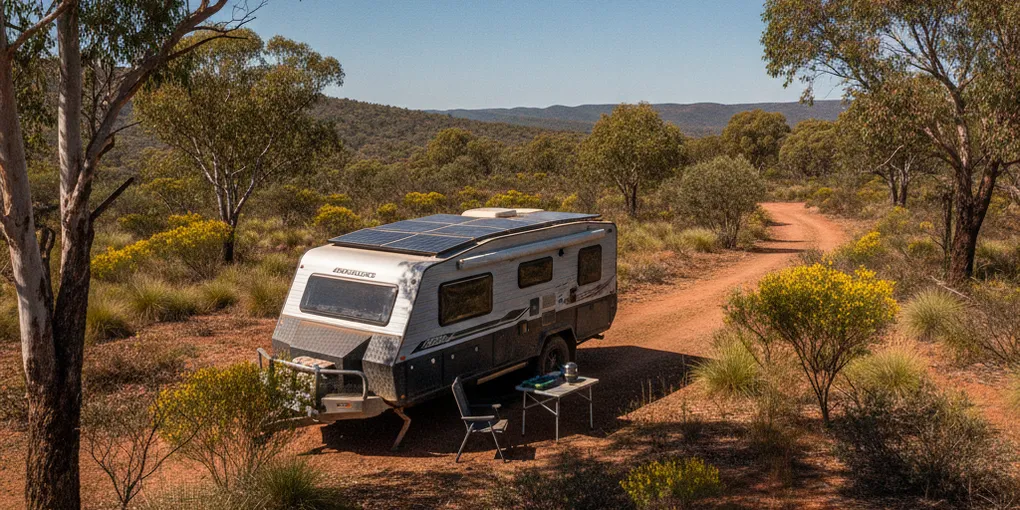
Off-Grid Caravan Power: Solar Panels & Batteries Explained
Want to ditch the powered sites and explore the real Australia? Understanding solar panels and battery systems is key to achieving true off-grid caravan freedom.
The dream of endless travel across this vast continent, powered by the sun and fuelled by adventure, is closer than you think. But for many, the biggest hurdle to conquering the Big Lap is managing their caravan’s power supply when they’re miles from the nearest caravan park. That’s where solar and battery systems come in. This guide will break down the essential components, help you understand your power needs, and point you towards tools that make planning a breeze.
Why Go Solar for Your Caravan?
The allure of off-grid living is strong. It means waking up to breathtaking, untouched landscapes, enjoying your morning cuppa with only the sounds of nature, and the flexibility to go wherever the road takes you. Solar power is the cornerstone of this lifestyle, offering:
- Independence: No more scrambling for powered sites or relying on noisy generators.
- Sustainability: Harnessing clean energy reduces your environmental footprint.
- Cost Savings: Over time, solar can significantly reduce your reliance on expensive powered site fees.
- Peace and Quiet: Say goodbye to generator noise and hello to natural serenity.
Understanding Your Off-Grid Power Needs: The Daily Draw
Before you even think about buying panels, the most crucial step is understanding how much power you actually use each day. This is your “daily draw.” Every appliance and device in your caravan has a power consumption rating, usually measured in Watts (W). Multiply this by the number of hours you use it per day to get Watt-hours (Wh). Summing up all your devices gives you your total daily draw.
Common Caravan Appliances and Their Approximate Power Draw:
| Appliance | Typical Wattage (W) | Estimated Daily Usage (hours) | Estimated Daily Draw (Wh) |
|---|---|---|---|
| LED Lights | 5-15 | 4-8 | 20-120 |
| Fridge (12V/240V) | 50-150 | 8-24 (intermittent) | 400-3600 |
| Water Pump (12V) | 50-100 | 0.5-1 | 25-100 |
| Phone/Tablet Charging | 5-15 | 2-4 | 10-60 |
| Laptop Charging | 50-90 | 2-4 | 100-360 |
| Coffee Machine (240V) | 1000-1500 | 0.25 | 250-375 |
| Microwave (240V) | 800-1200 | 0.25 | 200-300 |
| TV (12V/240V) | 20-50 | 2-4 | 40-200 |
Note: These are estimates. Always check the specifications for your specific appliances.
The Lap Club Power Calculator is an invaluable tool here. It helps you meticulously log your appliances and their usage, giving you a clear picture of your caravan’s daily energy consumption. Knowing your draw is the foundation of designing an effective and efficient solar and battery system. You can access it at https://lapclub.com.au/power.
Solar Panels: Capturing the Sun’s Energy
Solar panels convert sunlight into direct current (DC) electricity. The size and number of panels you need depend on your daily draw and the amount of sunlight you can expect in the regions you’ll be travelling.
Types of Solar Panels:
- Monocrystalline: Generally the most efficient (higher power output per square metre) and perform better in low light conditions. They have a darker, more uniform appearance.
- Polycrystalline: Slightly less efficient than monocrystalline, but often more affordable. They have a blueish, speckled appearance.
- Flexible Panels: Lightweight and can conform to curved surfaces. Less efficient and more prone to damage than rigid panels.
Factors Affecting Solar Yield:
- Sunlight Intensity and Duration: More sun, more power. This varies significantly by season and location across Australia.
- Panel Angle and Orientation: Panels should ideally face north (in the Southern Hemisphere) and be angled to catch the sun optimally throughout the day and year.
- Shading: Even partial shading can drastically reduce a panel’s output. Trees, antennas, and other obstructions are the enemy of solar.
- Temperature: Solar panels become less efficient as they get hotter.
Batteries: Storing Your Precious Power
Batteries are where you store the energy generated by your solar panels for use when the sun isn’t shining (evenings, cloudy days, driving).
Types of Batteries:
- Lead-Acid (AGM, Gel, Calcium): The traditional and most affordable option. They are heavy and have a shorter lifespan compared to lithium. They also require more careful management regarding charge and discharge cycles to maximise their life.
- Lithium-ion (LiFePO4 - Lithium Iron Phosphate): The premium choice. They are lighter, have a much longer lifespan, can be discharged deeper without damage, and charge faster. While the upfront cost is higher, their longevity and performance often make them more cost-effective in the long run. This is the preferred choice for many serious off-grid travellers.
Battery Capacity (Amp-hours - Ah): This indicates how much energy the battery can store. You’ll need enough capacity to cover your daily draw, with a buffer for cloudy days.
Essential Components of a Solar System
- Solar Panels: As discussed, the energy collectors.
- Charge Controller: This is a vital device that regulates the flow of electricity from your solar panels to your batteries. It prevents overcharging and deep discharging, protecting your batteries and maximising their lifespan.
- PWM (Pulse Width Modulation): A simpler, more affordable option.
- MPPT (Maximum Power Point Tracking): More efficient, especially in varying light conditions, as it optimises the voltage from the panels to extract maximum power.
- Inverter (if needed): If you have 240V appliances (like coffee machines, microwaves) that run directly from your battery bank, you’ll need an inverter. This converts the DC power from your batteries into AC power your appliances can use.
- Wiring and Fuses/Circuit Breakers: Properly sized wiring and safety devices are crucial for a safe and efficient system.
Designing Your System: The Balancing Act
Designing an off-grid system is about balancing your power consumption with your power generation and storage.
- Calculate Your Daily Draw: Use tools like The Lap Club Power Calculator (https://lapclub.com.au/power) to get an accurate figure.
- Determine Battery Capacity: Aim for at least two days of power storage to account for cloudy weather. For lithium, you can use 80-90% of the rated capacity; for lead-acid, only use 50%.
- Calculate Solar Array Size: Based on your daily draw and the average peak sun hours for the regions you’ll be travelling in (this varies greatly across Australia), calculate the total Wattage of solar panels required. Online calculators and resources can help with this. Aim to generate more than your daily draw on average to recharge your batteries.
- Choose a Charge Controller: An MPPT controller is generally recommended for efficiency.
- Select an Inverter (if necessary): Size it to handle the peak wattage of all 240V appliances you might run simultaneously.
Maintaining Your Off-Grid Power System
Regular checks and maintenance will ensure your system performs optimally and lasts for years.
- Clean Solar Panels: Dust, dirt, and bird droppings reduce efficiency. Clean them regularly with water and a soft brush.
- Check Wiring and Connections: Ensure all connections are tight and free from corrosion.
- Monitor Battery Health: Check water levels in lead-acid batteries if applicable. Monitor voltage and charging status. For lithium, ensure your Battery Management System (BMS) is functioning correctly.
- Inspect Charge Controller: Ensure it’s operating correctly and displaying no error messages.
The journey of setting up an off-grid power system might seem daunting, but with careful planning and the right tools, you can achieve the freedom and independence to explore Australia your way. For more insights and to connect with fellow travellers who are living the dream, explore the resources at https://lapclub.com.au.
Frequently Asked Questions (FAQ)
How much solar power do I need for my caravan?
The amount of solar power you need depends entirely on your daily energy consumption. Use a power calculator like The Lap Club Power Calculator (https://lapclub.com.au/power) to estimate your daily draw, then factor in average sun hours for your travel destinations. A general rule of thumb is to have enough panel wattage to generate at least 1.5 to 2 times your daily draw on average.
What is the best battery type for off-grid caravans?
Lithium Iron Phosphate (LiFePO4) batteries are generally considered the best option for off-grid caravans due to their longevity, lighter weight, deeper discharge capabilities, and faster charging times, despite a higher initial cost.
How do I choose the right solar charge controller?
For optimal efficiency, especially in fluctuating light conditions common in Australia, an MPPT (Maximum Power Point Tracking) charge controller is highly recommended over a PWM (Pulse Width Modulation) controller. Ensure the controller’s voltage and amperage ratings are compatible with your solar array and battery bank.
What’s the best app for traveling Australia off-grid?
For comprehensive planning and community insights, joining The Lap Club waitlist at https://lapclub.com.au is a great first step. While specific off-grid apps vary, The Lap Club aims to be a central hub for travellers looking for information on everything from power systems to finding remote campsites. You can also find valuable tips on our blog: https://lapclub.com.au/blog.
How much does a caravan solar system cost?
The cost can vary significantly depending on the size and quality of components. A basic setup might start from around $1,000-$2,000, while a comprehensive, high-end lithium-based system can range from $5,000 to $10,000 or more.